Neue Font
GD logo white
A Sacred Pilgrimage of Seva, Sadhana, and Satsang in the Kumaon Hills.

Himalayan Retreat
with Hanuman Dass & Friends

Go Dharmic Peace Centre & Oak Climbing Resort, Guniyalekh, Himalayas (Uttarakhand)
October 25th – November 1st, 2026

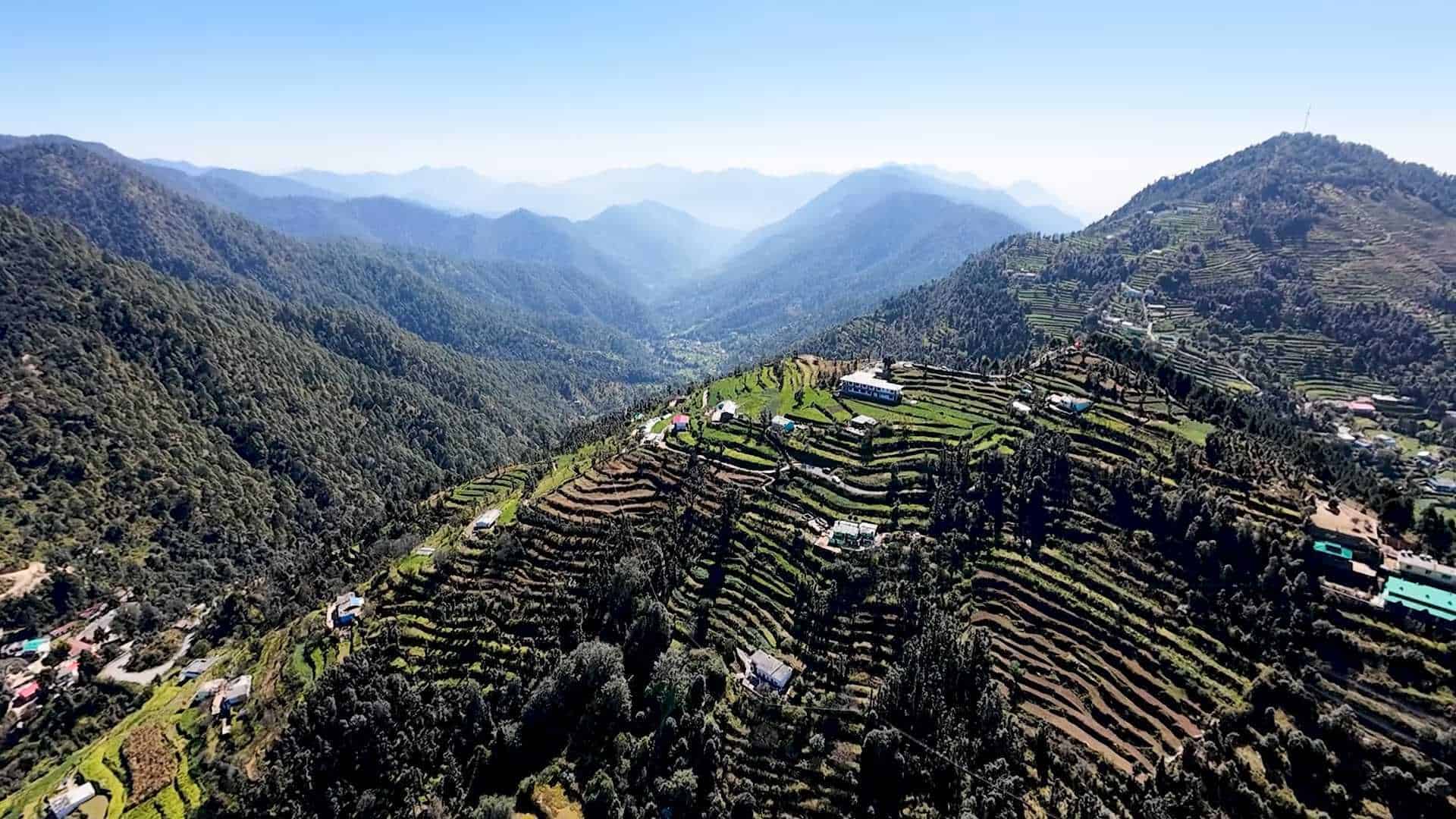
Step away from the demands of daily life and journey to Dev Bhumi – the Land of the Gods. This retreat is an invitation to immerse yourself in the spiritual silence of the Kumaon Himalayas, a region sanctified by saints and sages for centuries.

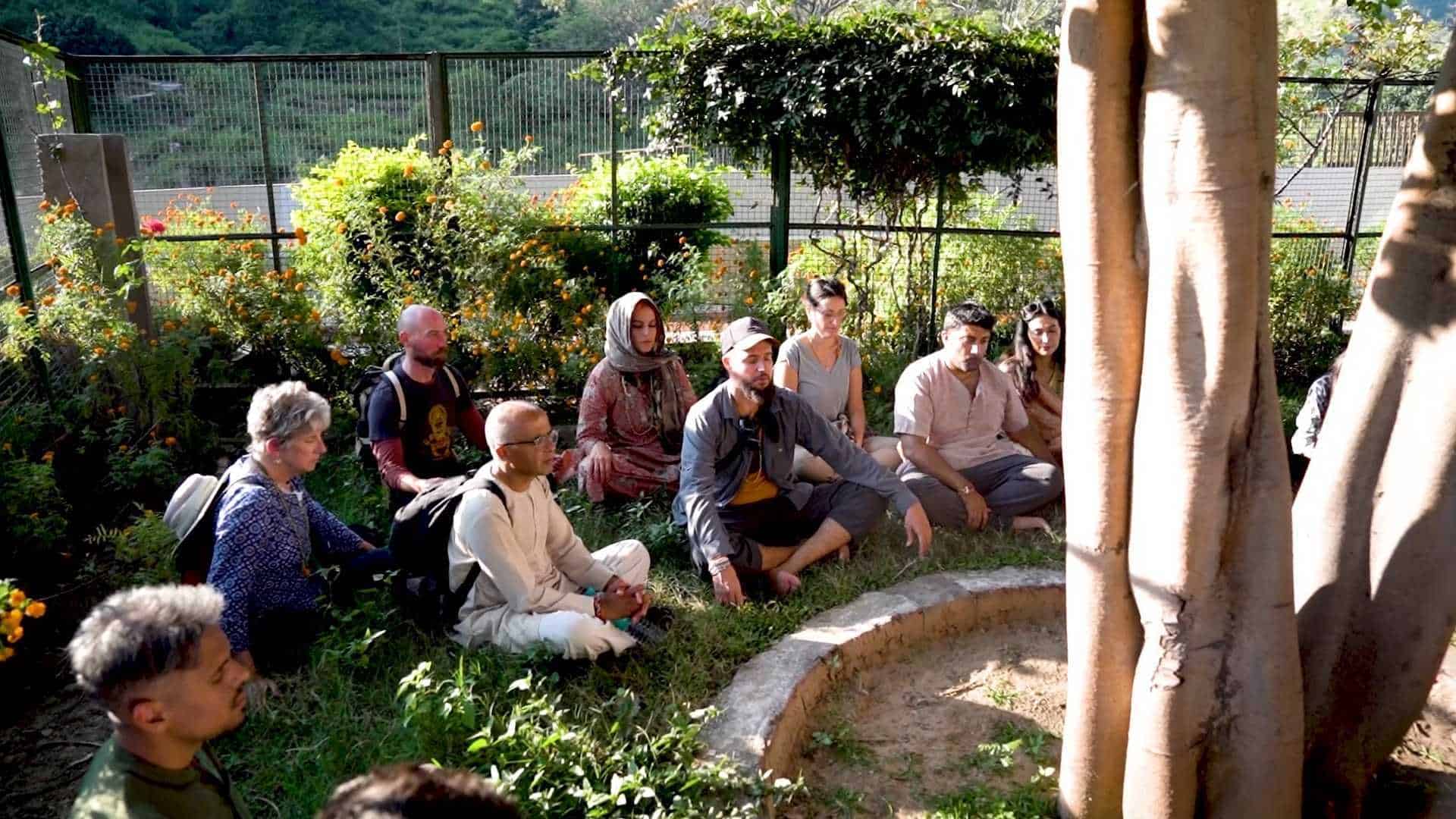
The Experience Based in the serene village of Guniyalekh, we create a grounding sanctuary away from the tourist trails. This is not a sightseeing tour; it is a return to the “Satsang” – a spiritual family living, practicing, and serving together.

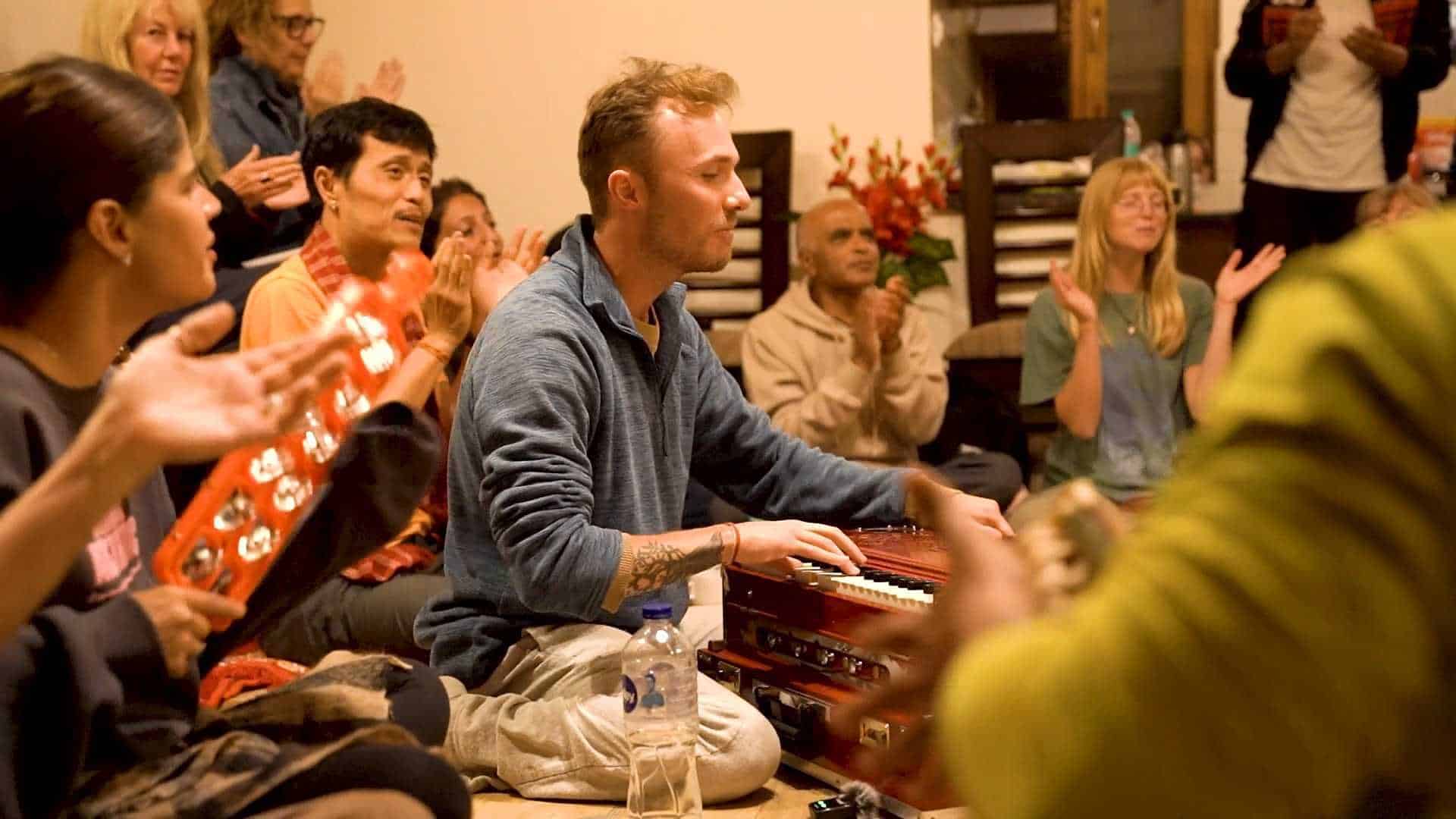
Nature of the Retreat This gathering is rooted in the traditions of Bhakti (devotion) and Seva (service). It is a time to deepen your connection with the Divine through daily chanting, the warmth of the sacred fire (Havan), and the grounding practice of selfless service at our local community projects. You will walk the same paths as Neem Karoli Baba and Swami Vivekananda, finding a rhythm dictated not by the clock, but by the spirit.

Overall Intention Our intention is to offer a space for sincere practice. Whether you are a long-time devotee or simply seeking a deeper understanding of Dharma, this retreat offers the environment to reconnect with your inner truth in the presence of a supportive community.

Why This Retreat What Makes It Special

Join the Satsang

Sacred

Geography

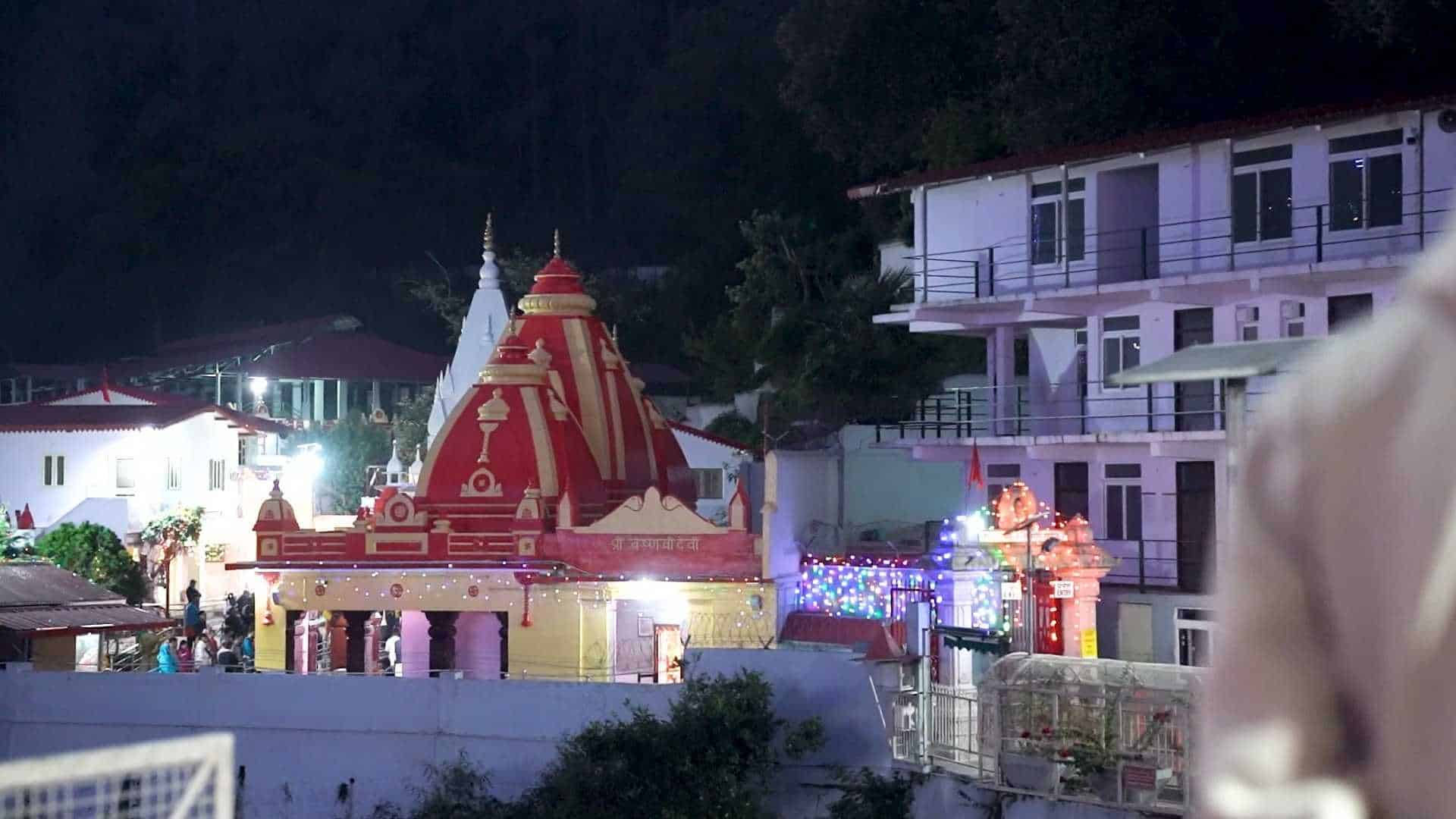
We utilize the powerful spiritual environment of the Kumaon Hills as our temple. You will visit Kainchi Dham, the ashram of Neem Karoli Baba, to soak in the vibrations during the evening Aarti. We will also pilgrimage to Kakrighat, where Swami Vivekananda meditated, and the mystical Sombhari Baba Cave, allowing the sacred geography to support your inner journey.

The Fire

of Devotion

Evenings are spent in the company of the Satsang, often around a sacred bonfire. We gather for nightly Satsang and Kirtan, chanting the Hanuman Chalisa and sharing stories of the saints. We perform traditional Havan (fire ceremonies) to invoke blessings and clear the mind, keeping the flame of devotion alive in our hearts.

Compassion in
Action (Seva)

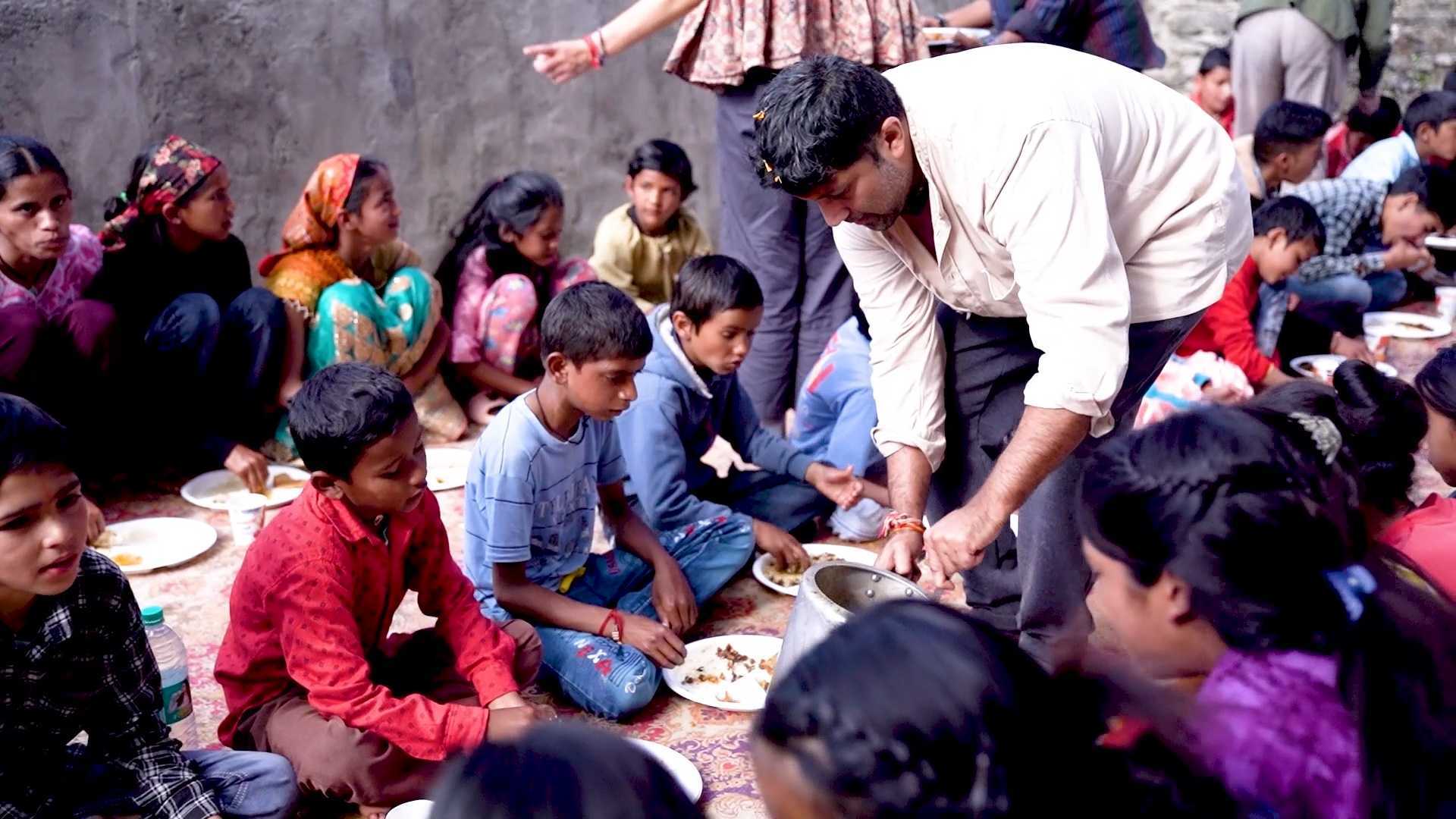
We embody the Go Dharmic spirit through tangible Seva. A core part of this retreat is visiting a local village school developed by Go Dharmic. You will not just observe but participate—joining the children for activities and sharing a community lunch. This is “Love All, Serve All” in practice.

Guided Wisdom
& Lineage

You will be in the company of Hanuman Dass, who will lead sessions on the Hanuman Chalisa and the practical application of Dharma. Uniquely, this retreat includes a visit to the family of the late Sri K.K. Sah in Nainital. K.K. Sah was a close devotee of Neem Karoli Baba, and this is a rare opportunity to hear personal stories and intimate accounts of Maharaj-ji directly from his lineage.

About Go Dharmic

Go Dharmic is an international movement for compassion in action. It serves as a platform for anyone, anywhere, to make a positive difference in the world.

Mission & Values

Inspired by Sanatana Dharma and the teachings of Neem Karoli Baba, our mission is to realize the ancient idea of Vasudhaiva Kutumbakam (The world is one family). Our core philosophy is simple yet profound: “Love All, Feed All, Serve All”.

Go Dharmic 
Impact / Statistics

Be Part of the Impact

Meals Distributed Worldwide

0 Million+

Mangrove Trees Planted

0 +

Schools Supported with Libraries/Labs

0 +

Volunteer Hours Contributed

0 Million+

A Message From
The Founder and Director

“Neem Karoli Baba said, ‘Why do you want to get to Heaven? Can’t you see? This is it. It is our job to make this a Heaven for everyone.’
This retreat is a call to ‘Go Dharmic’—to act for the welfare of the world and to find peace within ourselves. I invite you to join us in the Himalayas, not as a guest, but as family. Let us chant, serve, and realize that we are all one.”


- Hanuman Dass, Founder of Go Dharmic

Retreat Details

October 25th – November 1st,
2026 (8 Days, 7 Nights).

Arrival / Departure Info

Arrival: We request everyone to arrive at Pantnagar Airport (PGG) on the morning or afternoon of October 25th. Group transfers to Guniyalekh will be arranged based on flight arrivals.

Departure: The retreat concludes with a morning ceremony on November 1st. Transfers will be provided back to Pantnagar Airport for your onward journey.

Who It’s For

This gathering is inclusive and open to all. Whether you are new to the path of Bhakti or have been practicing for years, you are welcome. The environment is supportive, grounded, and focused on community.
What’s Included

Accommodation

Stay at the peaceful Oak Climbing Resort and the Go Dharmic Peace Centre in Guniyalekh. Accommodation is simple, comfortable, and deeply immersed in nature, designed to foster a community spirit.

Food

All meals are Vegan and Sattvic. We provide nutritious breakfast, lunch, and dinner, prepared with mindfulness to nourish both body and spirit during your Sadhana.

Sessions / Activities

Transfers

All ground transport during the retreat (to temples, seva sites, and excursions) and airport transfers between Pantnagar Airport and the retreat centre are included.

Note on Travel

Please note that flights (International and Domestic) and Indian Visa fees are not included and must be arranged by the participant.

Day-Wise Itinerary

Day 1: October 25 – Arrivals & The Sacred Welcome

Frequently
Asked Questions

What is the food policy at the retreat?
All food served is strictly Vegan and Sattvic (pure, energy-giving). This supports your spiritual practice and aligns with our values of non-violence. We can accommodate allergies if notified in advance.
You must book your own international flight to New Delhi (DEL), and a connecting domestic flight to Pantnagar (PGG).
No experience is necessary. The chanting is about devotion, not performance, and the yoga is accessible to all levels. This is a space of the heart.
Wi-Fi is available at the resort but can be intermittent in the mountains. We encourage you to view this as an opportunity for a digital detox.
Seva is selfless service. During the retreat, we will visit a school supported by Go Dharmic to engage with the children. Participation is invited and is a beautiful way to practice Karma Yoga.
Yes. You must purchase comprehensive travel insurance that covers medical emergencies and trip cancellation. Please carry a copy of your policy.

Post-Registration
Information

What Happens After Registration

You will receive an immediate email confirmation securing your spot in the Satsang.

What You Will Receive

Closer to the event, we will send a comprehensive Welcome Pack containing a detailed packing list (layers are key for the Himalayas!), final travel instructions, and a form to collect any dietary or medical requirements.

Next Steps & Updates

You will be invited to join a private WhatsApp group for attendees. This will be a space to introduce yourself, coordinate travel plans, and receive real-time updates from the organizing team.

A Sacred Pilgrimage of Seva, Sadhana, and Satsang in the Kumaon Hills.

Himalayan Retreat with Hanuman Dass & Friends

Go Dharmic Peace Centre & Oak Climbing Resort, Guniyalekh, Himalayas (Uttarakhand)
October 25th – November 1st, 2026

The Satsang is waiting for you

Spaces are strictly limited to maintain the intimacy and sanctity of the gathering. Don’t miss this opportunity to recharge your spirit in the home of the Gods.
[gd_subscription_monthly]

ACT NOW

Our campaign ‘Go Plant-Based’ focuses on using plant-based products in our daily lives. It reduces the load on natural resources like air, water, and land.

Select one of the following options to our Go Plant-Based Campaign

1. Vegetarian

2. Vegan

#VeganByChoice

Some facts and figures :

  • Researchers at the University of Oxford found that cutting meat and dairy products from your diet could reduce an individual’s carbon footprint from food by up to 73 percent.

  • The global contribution of animal farming to GHG emissions is agreed to be 14.5% more than the direct emissions from all transport combined. – The Vegan Society

  • Rearing livestock doesn’t just produce a lot of greenhouse gases – it has other impacts on the environment too. Every kilogram of beef produced requires around 15,400 liters of water, according to a report from UNESCO’s Institute for Water Education.

PROBLEM

The animal agriculture industry plays a major role in dietary greenhouse gas emissions across the world. Overwhelming evidence from studies across the world regarding climate change suggests that from production to consumption the impact is great.

There are so many causes. From the land to foster animals, land to grow vegetation exclusively for livestock consumption, air pollution because of methane gas released by animals, and water pollution due to the excretion and improper discard of animal waste.

Apart from fostering, the meat food waste emits more CO2 in the atmosphere when left untreated. Experts believe that animal agriculture is the biggest source of greenhouse gas emissions, greater than all the transportation systems of the world combined.

Some facts and figures:

-The Environmental Protection Agency states that raising animals for food is the number-one source of water pollution.
-United Nations states that the meat, egg, and dairy industries account for about 65 per cent of worldwide nitrous oxide emissions.

-An Oxford University study, published in the journal Climatic Change, shows that meat-eaters are responsible for almost twice as many dietary greenhouse-gas emissions per day as vegetarians and about two and a half times as many as vegans.

-According to studies, animal agriculture globally, is the single largest component responsible for maximum methane gas release in the atmosphere.
-The meat industry is directly responsible for 85 per cent of all soil erosion in the U.S, states PETA.

Choosing an animal-based diet is often the elephant in the room. It is often overlooked as we as a global community are working to curb climate change

Turning to a plant-based diet is an easy fix.

Solution

With evolving technology, we surely have got many options to choose from on how we wish to travel for work or to the nearest stores for respective reasons.
The small decisions that we make on a day-to-day basis, actually determines the kind of climate we experience over a period of time.
Hence here are some options which can have a big impact if all of us do our bit towards it.

-Shift to fuel-less travel options like cycling or walking to your workplace or nearest grocery store whenever possible.
-Increase the use of public transport.
-Opting for sharing/pooling options while travelling with friends or family.

PROBLEM

The air pollution caused by the transport industry is an alarming situation globally.
Amongst all kinds of transport means, road transport is the largest contributor to global warming. Usage of petroleum, oil and fossil fuels for transportation emits various gases that concerns our environment.
Out of the six gases which are formally identified by the United Nations Framework Convention for Climate Change (UNFCCC) , three of them are related to the transport sector. They are – carbon dioxide, methane, and nitrous oxides. Emission of all three gases acts as a significant contributor to global warming.

There are various factors under transportation that determine the air pollution caused by it. Here are a few of them :
1. Excessive use of vehicle
2. Evolving technology
3. Poor maintenance of vehicles
4. Usage of substitute fuels instead of the ones set out by the Environment Board of a particular city/state.

Transport industry is one of the major contributors of producing greenhouse gases, especially in countries like the UK and the US.

Facts and Figures:

One of the reports from BBC states that –

The average petrol car on the road in the UK produces the equivalent of 180g of CO2 every kilometre, while a diesel car produces 173g of CO2/km.

In the US the average passenger vehicle on the road releases 650g of CO2/km. Generally, the larger the car, the higher the emissions.

CO2 emissions from passenger transport vary significantly depending on the transport mode. Passenger cars are a major polluter, accounting for 60.7% of total CO2 emissions from road transport.

SOLUTION

We can opt for options which are environment friendly. When we consume less electricity, we reduce polluting carbon emissions that is caused because of the release of toxic fuels burnt due to electricity generation.

A simple change in our behaviour can help us save the environment. These changes are simple as:

  1. Switching off the lights, fans and other electric and electronic devices when not in use.
  2. Using LED lights and bulbs, as they consume very little electricity and don’t produce much heat
  3. Switch to renewable sources of energy.
  4. Using solar energy and wind energy wherever possible.

FACTS
Reducing your PC monitor brightness from 100% to 70% can save up to 20% of the energy the monitor uses. (Harvard)

-Mobile phone chargers, laptop docking stations and some desktop printers use energy regardless of whether they are charging or not because the voltage transformers on the plug consume energy. This is known as electrical leakage.

-A 15-second lift journey consumes as much energy as a 60W light bulb does in an hour states Cambridge University.
-If you ensure that just 4 lights around your workspace are switched off every night, each year you could:

  1. Save as much CO2 is produced by 20 car trips from London to Paris.
  2. Reduce your carbon footprint by the same amount as cutting out 10 flights from London to Paris.

-According to Energy Saving Trust, turning off unneeded lights could remove 171 kg (376 lb) of CO2 emissions per year.

-A single light left on overnight over a year accounts for as much greenhouse gas as a car drive from Cambridge to Paris. – University of Cambridge

-Nearly 50% of the CO2 emissions produced by the UK come from heating and cooling in buildings. – States Carbon Trust

PROBLEM

The cost of generating electricity is the largest component of the price of electricity. – U.S Energy Information Administration

!! The UK wastes £170 million a year by leaving lights on unnecessarily states Energy Saving Trust, UK !!

Roughly 50 devices and appliances in the typical American household are always drawing power, even when they appear to be off, estimates Alan Meier, a senior scientist at the Department of Energy’s Berkeley Lab.

More than often, we tend to neglect and leave lights and switches on when not in use. This negligence results in the over-consumption of electricity which contributes significantly to carbon emissions that harm the environment.

About a quarter of all residential energy consumption is used on devices in idle power mode, according to a study of Northern California by the Natural Resources Defense Council. This means that devices that are “off” or in standby or sleep mode can use up to the equivalent of 50 large power plants’ worth of electricity and cost more than $19 billion in electricity bills every year.

The environmental cost this takes is – overall electricity production represents about 37 percent of all carbon dioxide emissions in the United States, one of the main contributors to climate change.
There are various factors that affect energy consumption. Some of these are:

  1. Lights, Fans/Heaters turned on when not in use.
  2. Switches of various electronic items such as blenders, washing machines, televisions, and mobile charging plugs that are left on when not in use.
  3. Usage of high watt lights and bulbs.
  4. Excess usage of air conditioners. Even at a very low temperature, AC units consume high amounts of electricity.

DID YOU KNOW?

Electric power lines and other distribution infrastructure also have a footprint!
Electricity transmission lines and the distribution infrastructure that carries electricity from power plants to customers also have environmental effects. Most transmission lines are above ground on large towers. The towers and power lines alter the visual landscape, especially when they pass through undeveloped areas. Vegetation near power lines may be disturbed and may have to be continually managed to keep it away from the power lines. These activities can affect native plant populations and wildlife. Power lines can be placed underground, but it is a more expensive option and usually not done outside of urban areas.

Source – U.S Energy Information Administration

Thank you for choosing to Switch And Save

Thank you for choosing to Go Fuel Free

Thank you for choosing to Go Plant Based

Error: Contact form not found.

Error: Contact form not found.