Neue Font

A Coastal Pilgrimage of Devotion, Seva, and Satsag
Peace & Bhakti Retreat 2026,
Dorset, England
with Hanuman Dass and Friends
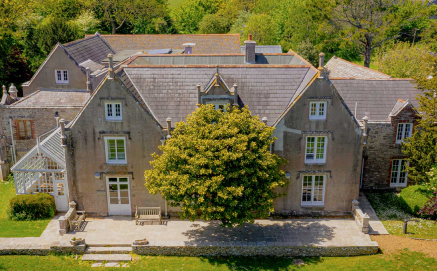
Leeson House, Dorset, United Kingdom
July 31st – August 3rd, 2026
Step away from the noise of the world and step into a space of pure devotion and community. This gathering is a return to the “Satsang” – a spiritual family coming together in the spirit of Love and Service. Nestled within the serene grounds of Leeson House on the Jurassic Coast, we create a temporary ashram where the rhythm of the day is dictated not by the clock, but by the heart.
This is an immersive Bhakti Satsang. It is a time to deepen your connection with the Divine through the chanting of holy names, the warmth of the sacred fire, and the grounding practice of selfless service. It is a space where we live, cook, pray, and eat together as one family, dissolving the boundaries between stranger and friend.
Our intention is to offer a sanctuary for the soul – a place to practice “Love All, Serve All” in a living community. Whether you are seeking peace, spiritual company, or a deeper understanding of Dharma, this retreat offers the environment to reconnect with your inner truth.
Why This Retreat What Makes It Special
Join the Satsang
Sacred
Geography
We utilize the stunning natural environment as our temple. You will walk the ancient paths of the Jurassic Coast, meditate by the vast ocean , and visit the historic St. Aldhelm’s Chapel – a powerful spiritual site on the cliff’s edge where prayers have been offered for centuries.
The Fire
of Devotion
Evenings are spent under the open sky around a sacred fire pit. Here, we perform Havan and gather for nightly Kirtan, chanting the Hanuman Chalisa and sharing stories of the saints, keeping the flame of devotion alive in our hearts.
The Joy of Annadan
(Communal Cooking)
Food is love in action. A unique feature of this retreat is our communal kitchen seva. Under the guidance of our kitchen lead, we will chop, stir, and cook together, transforming the preparation of our meals into a joyful, meditative offering for the whole group.
Guided
Wisdom
You will be in the company of Hanuman Dass, who will lead daily sessions on the Hanuman Chalisa and the practical application of Dharma.
Compassion
in Action
We embody the Go Dharmic spirit through tangible Seva. We will conduct a coastal clean-up, offering our service to Mother Nature, ensuring we leave our sacred surroundings purer than we found them.
About Go Dharmic
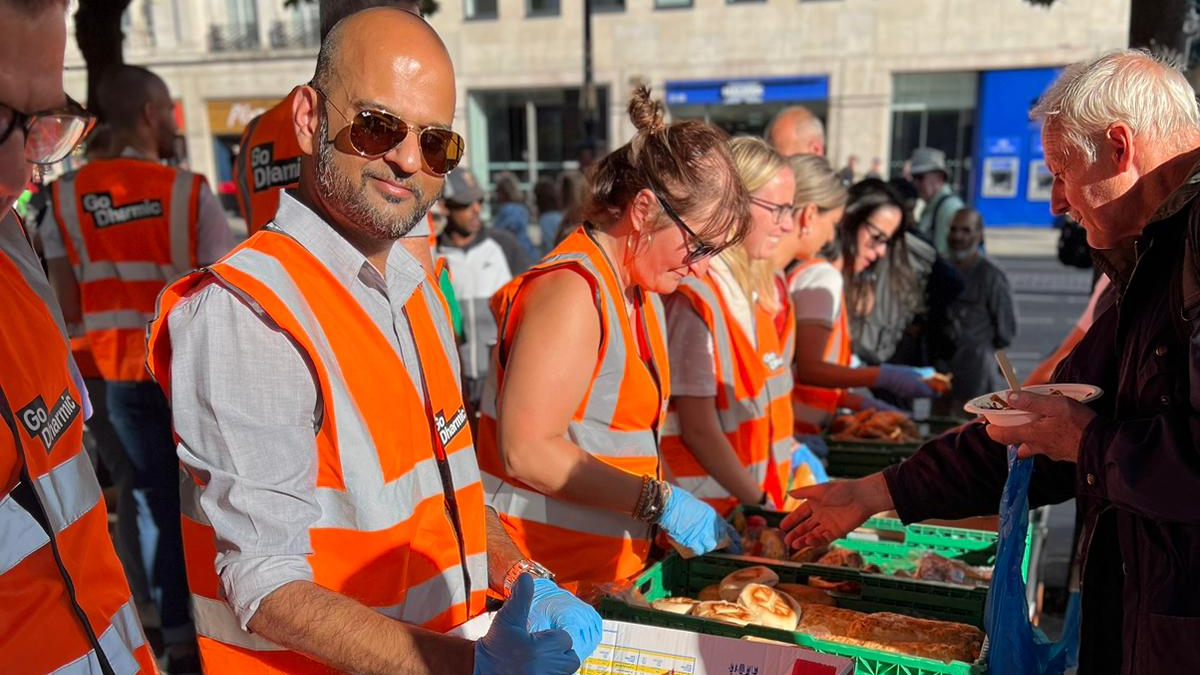
Go Dharmic is an international movement for compassion in action. It serves as a platform for anyone, anywhere, to make a positive difference in the world.
Mission & Values
Inspired by Sanatana Dharma and the teachings of Neem Karoli Baba, our mission is to realize the ancient idea of Vasudhaiva Kutumbakam (The world is one family).
Our core philosophy is simple yet profound: “Love All, Feed All, Serve All”. We work to relieve suffering across the globe through food distribution, education, disaster relief, and environmental protection.
A Message From The Founder and Director
“Neem Karoli Baba said, ‘Why do you want to get to Heaven? Can’t you see? This is it. It is our job to make this a Heaven for everyone.’ This retreat is a call to ‘Go Dharmic’ – to act for the welfare of the world and to find peace within ourselves. I invite you to join us in Dorset, not as a guest, but as family. Let us chant, serve, and realize that we are all one.”
- Hanuman Dass, Founder of Go Dharmic
Retreat Details
July 31st – August 3rd, 2026
(4 Days, 3 Nights)
Arrival / Departure Info
Check-in begins at 3:00 PM on Friday, July 31st. We request everyone to arrive by late afternoon to settle in before the opening circle. The retreat concludes after breakfast and a closing ceremony on Monday, August 3rd.
Who It’s For
This gathering is inclusive and open to all. Whether you are a long-time devotee or new to the path of Bhakti, you are welcome. The venue is fully accessible, making it suitable for the elderly and those with mobility requirements. Families are warmly welcomed.
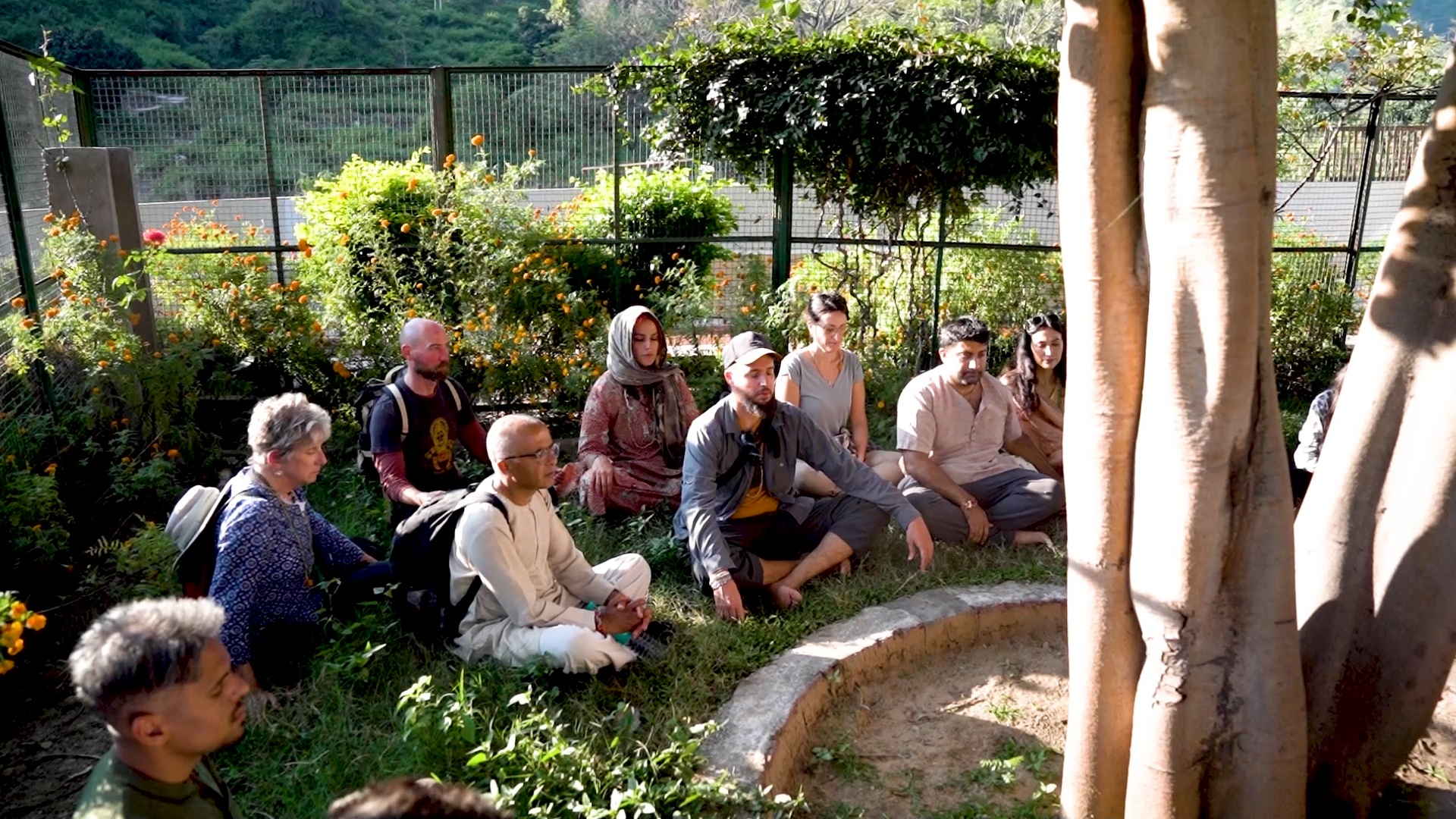
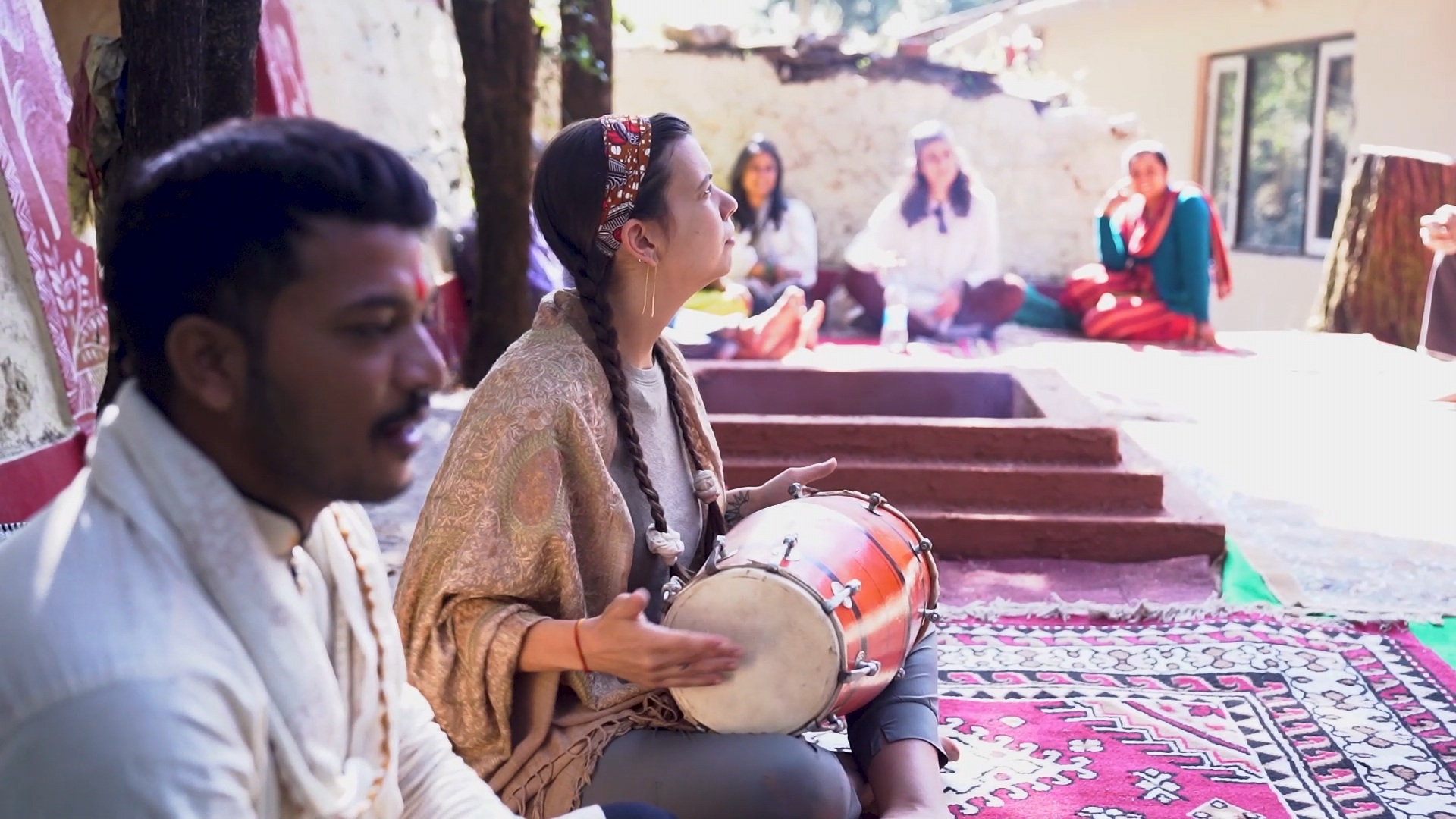

What’s Included
Accommodation
Simple, grounding accommodation at Leeson House. Options include dormitory-style shared rooms to foster community spirit) or a limited number of twin en-suite rooms.
Food
All meals are strictly Vegan and Sattvic. We provide breakfast, lunch, and dinner, prepared with mindfulness to nourish both body and spirit.
Sessions / Activities
Daily Morning Yoga and Sound Bath, Evening Kirtan and Hanuman Chalisa sessions, Dharma talks with Hanuman Dass, Guided Coastal Walks, and Film Screenings (including the KK Shah documentary).
Note on Travel
Please note that travel to and from the venue is not included in the retreat cost and must be arranged by the participant.
Day-Wise Itinerary
Day 1 - Arrival & The Sacred Gathering
- Afternoon: Arrival at Leeson House from 3:00 PM. Settle into your rooms and meet the community.
- Evening: Welcome Circle and Orientation.
- Dusk: Evening Aarti and Hanuman Chalisa chanting.
- Dinner: Our first communal Vegan meal.
- Night: Opening Satsang and intention setting.
Day 2 - Nature & Seva (The Pilgrimage)
- Morning: Sunrise Yoga and Sound Bath to awaken the spirit.
- Mid-Day: Pilgrimage Walk: We journey to the ancient St. Aldhelm’s Chapel and view the dinosaur footprints along the coast.
- Afternoon: Seva Activity: A dedicated Coastal Clean-up drive to serve the environment.
- Evening: Havan: We gather around the outdoor fire pit for a sacred fire ceremony, chanting, and storytelling under the stars.
Day 3 - Devotion & Annadan
- Morning: Morning Sadhana (Yoga and Meditation).
- Mid-Day: Dharma Workshop with Hanuman Dass: Deepening our understanding of the Gita.
- Afternoon: Communal Cooking Seva: We come together in the kitchen to chop, cook, and prepare the evening feast - learning the art of mindful cooking.
- Evening: The Great Satsang: A simple yet profound evening dedicated entirely to Kirtan and chanting the Hanuman Chalisa with Hanuman Dass.
- Night: Special Film Screening (KK Shah / Go Dharmic Impact) and reflection.
Day 4 - Closing & Departure
- Morning: Final Yoga session and Closing Circle.
- Breakfast: Farewell Vegan breakfast.
- Departure: Check-out and departure by 11:00 AM, carrying the energy of the Satsang home.
Frequently Asked Questions
What is the food policy at the retreat?
In alignment with our values of compassion and non-violence, all food served at the retreat will be Vegan. The meals are nutritious, Sattvic, and prepared to support your spiritual practice.
How do I reach the venue?
Travel to the venue is the responsibility of each participant.
- Train & Bus: We recommend taking a train to Wareham Station. From there, the "Purbeck Breezer" double-decker bus is a convenient local option that stops near the venue.
- Car: There is ample free parking available on-site if you choose to drive.
- Station Pickup: While we recommend the bus or taxi, we may coordinate a limited pick-up point from the station closer to the time, but this is not guaranteed.
Do I need experience in chanting or yoga?
No experience is necessary. This is a space of the heart. The chanting is about devotion, not performance, and the yoga is accessible to all levels.
Is the venue accessible for those with mobility issues?
Yes. Leeson House is equipped with a lift and offers adapted bedroom and bathroom facilities. Please inform us of your needs during registration so we can ensure your comfort.
Is this suitable for families?
Absolutely. The retreat takes place during the school summer holidays, making it a perfect time to bring children and experience the Satsang as a family.
What is "Seva" and do I have to participate?
Seva is selfless service. We invite everyone to participate in keeping our shared space tidy, chopping vegetables for meals, or helping with the beach clean. It is a beautiful way to bond with the group and practice Karma Yoga.
Is travel cost included in the ticket?
No. To keep the retreat fee as a donation towards our charity work, we ask that you arrange and pay for your own transport to the venue.
About
Your Guides
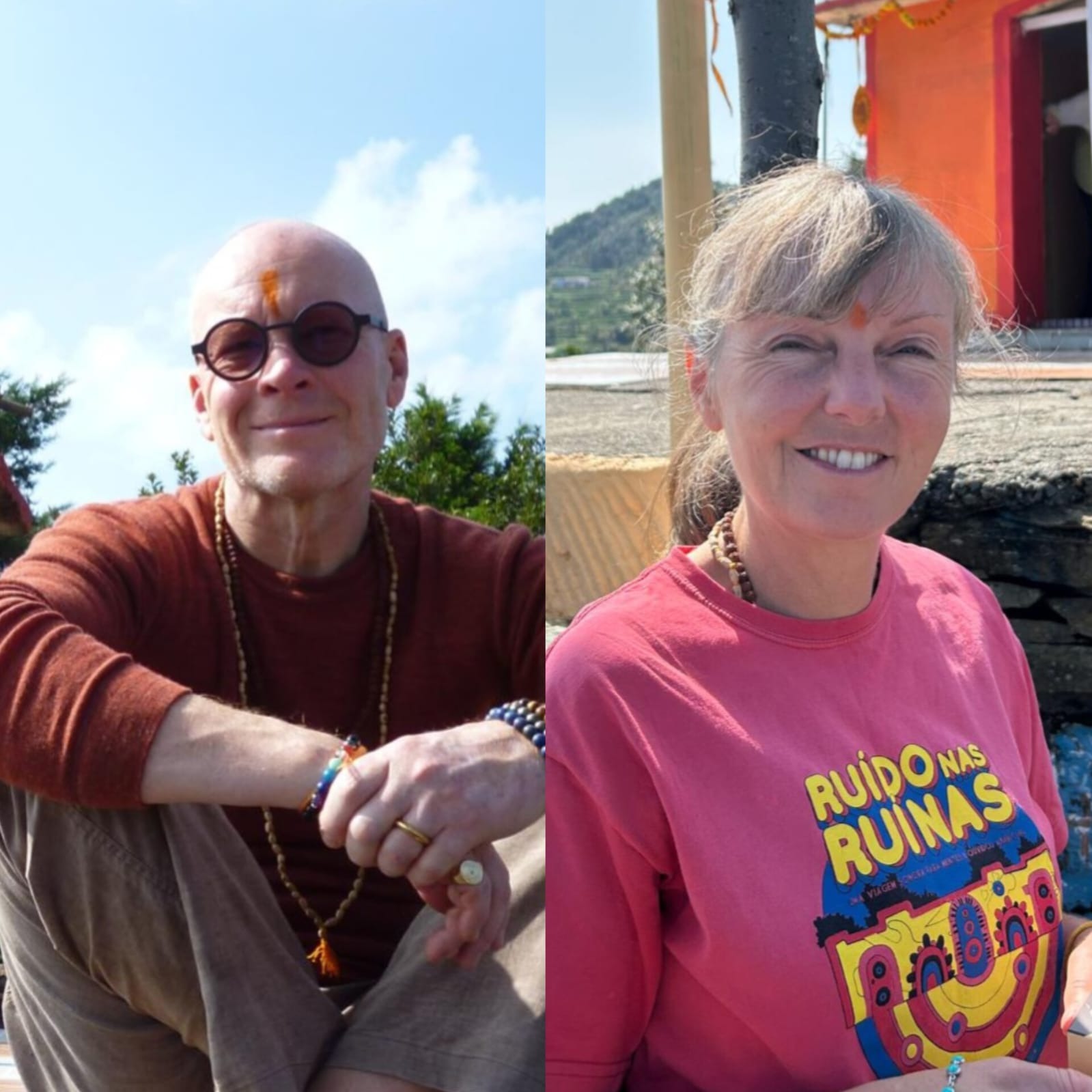
Andrew and Samantha offer their presence and practices as seva, rooted in a shared journey shaped by devotion, friendship, and satsang.
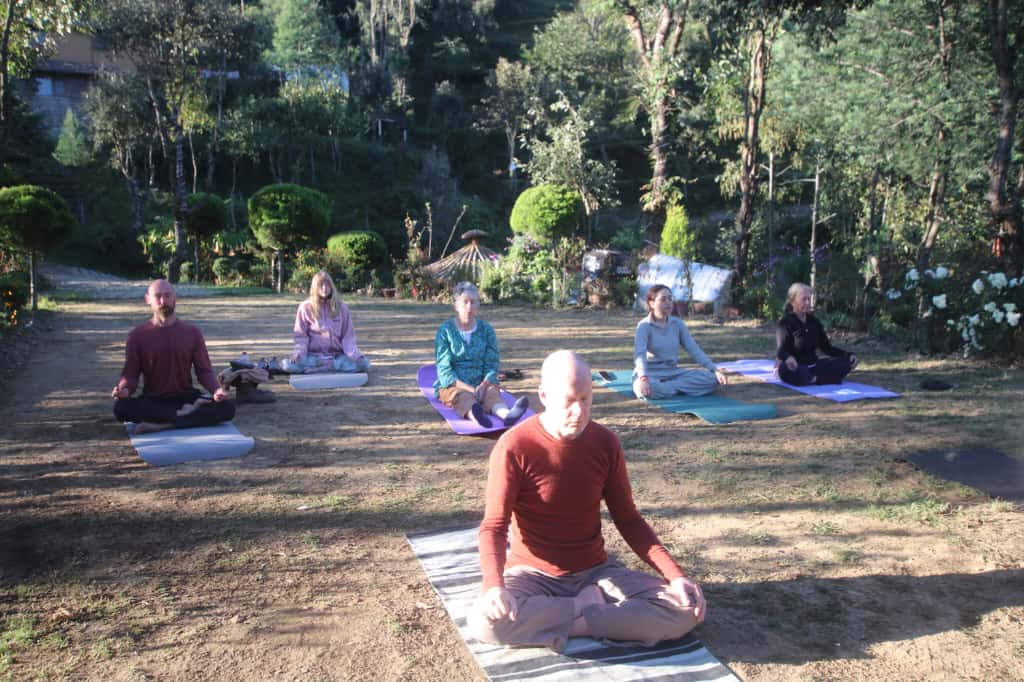
Their path was deepened in the foothills of the Himalayas, where individual journeys naturally unfolded into a sense of spiritual family. It is from this space that they bring gentle morning practices to the Dorset retreat — welcoming each day through mindful movement, breath, pranayama, sound, and yoga nidra.
Their offerings are accessible to all, with no prior experience required. Alongside these morning practices, they will also guide mindful walks along the Jurassic Coast, allowing nature, movement, and shared silence to become part of the retreat’s devotional rhythm.
All sessions are offered in the spirit of seva and are entirely optional.
Mita supports the retreat through her work as a holistic therapist, sound healer, and wellbeing consultant, offering spaces grounded in presence, care, and compassionate connection.
Her approach draws on sound healing, Reiki, meditation, and embodied practices, creating gentle and trauma-informed environments that support restoration, balance, and inner alignment. Her work reflects a deep respect for the nervous system, the body, and the subtle layers of human experience.
Aligned with the ethos of Go Dharmic, Mita offers her support as seva — contributing to the collective wellbeing of the sangha and the overall harmony of the retreat.

Post-Registration Information
What Happens After Registration
You will receive an immediate email confirmation securing your spot in the Satsang.
What You Will Receive
Closer to the event, we will send a comprehensive Welcome Pack containing a detailed packing list, final travel instructions, and a form to collect any dietary or medical requirements.
Next Steps & Updates
You will be invited to join a private WhatsApp group for attendees. This will be a space to introduce yourself, coordinate travel sharing (such as taxi shares from the station), and receive real-time updates from the organizing team.
The Satsang is waiting for you
Spaces are limited to maintain the intimacy and sanctity of the gathering. Don’t miss this opportunity to recharge your spirit and support a beautiful cause.
If you wish to sponsor a meal (Annadan) or support the retreat logistics as a Dharma Patron, please contact us directly at the email above.
© 2026 Go Dharmic · Love All. Feed All Serve All.